Navigating Homeschooling in Massachusetts: What You Need to Know First
Many parents wonder, do homeschools have to be accredited in Massachusetts? The straightforward answer is:
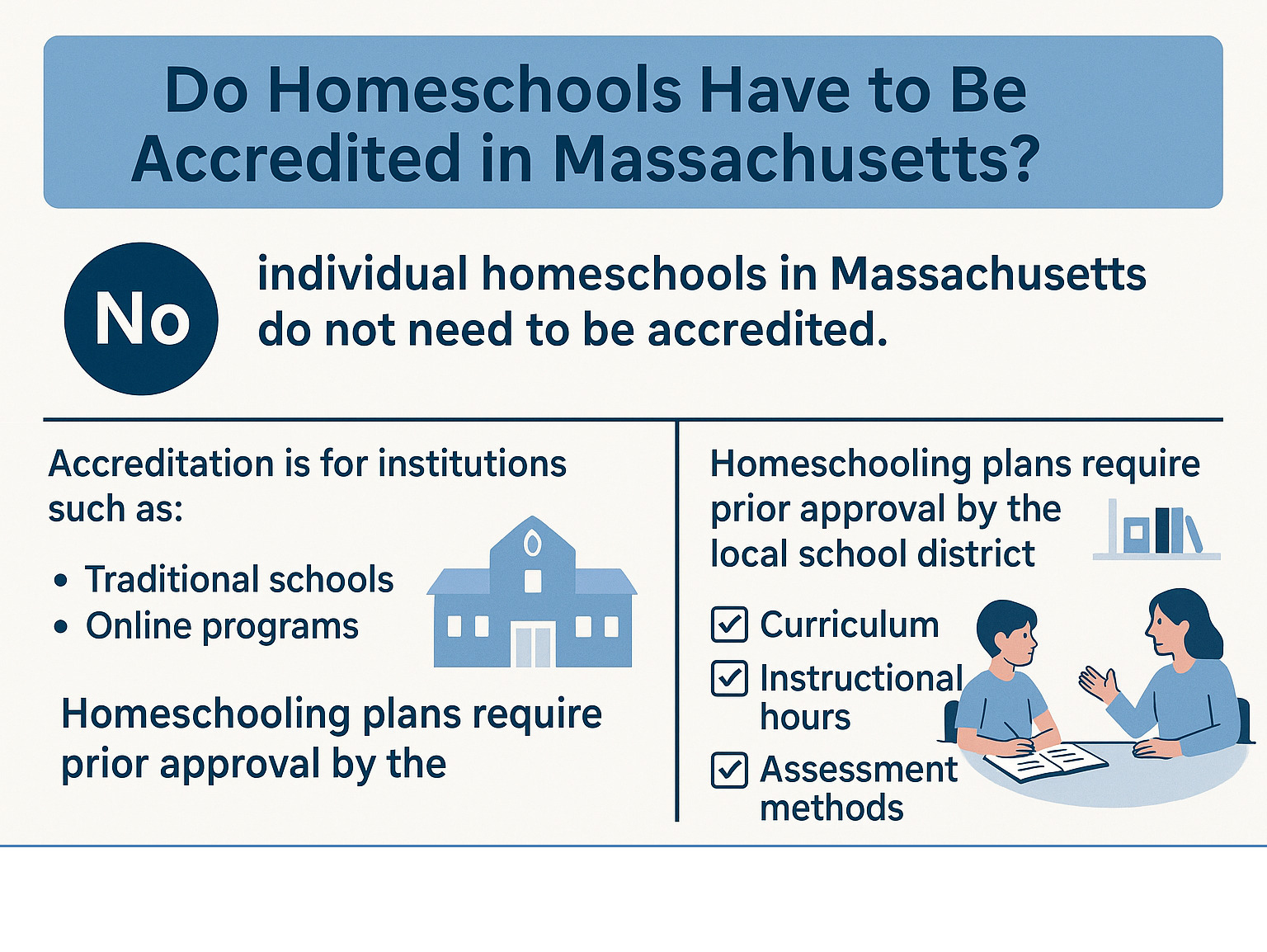
- No, individual homeschools in Massachusetts do not need to be accredited.
- Instead, parents must seek advance approval for their home education plan from their local school superintendent or committee.
- This approval process ensures the proposed education meets state standards for thoroughness and efficiency, but it is distinct from institutional accreditation.
Choosing to homeschool is a big decision, and understanding the requirements can feel complex. Massachusetts law provides a clear framework for home education, balancing parental rights with the state’s interest in ensuring a quality education.
I’m Peter Panopoulos. As an educator with over eight years of experience teaching in Massachusetts public schools and working closely with homeschooling families, I’ve gained valuable insight into the nuances of the state’s educational requirements. My expertise can help clarify if do homeschools have to be accredited in Massachusetts is a concern for your family.
Accreditation vs. Approval: What Massachusetts Homeschool Families Need to Know
When families start thinking about homeschooling in Massachusetts, one of the most common questions that pops up is, “do homeschools have to be accredited in Massachusetts?” It’s a fantastic question, and it points to a really important distinction that every homeschooling family in the Bay State needs to understand. While “accreditation” is a term you hear a lot in education, it actually applies quite differently to individual homeschooling families compared to traditional schools or formal programs.
In Massachusetts, the focus for homeschools isn’t on “accreditation” but on “approval” from your local school district. This process ensures your home education plan meets the state’s requirements. It’s how Massachusetts law balances parental rights in educational choices with the state’s interest in making sure children receive a good education under compulsory attendance laws. The landmark Care & Protection of Charles case. from 1987 was key in clarifying these parameters for homeschooling approval. It set the stage for how home education is regulated here.
What is Accreditation?
So, what exactly is accreditation? Think of accreditation as a stamp of quality and accountability, typically for an educational institution or a specific program. It involves a voluntary, third-party review to make sure that a school, college, or even some online learning programs meet high standards of academic quality and rigor. This process gives the public confidence that the institution provides a credible and effective education. For example, many private schools and online programs seek accreditation to show they meet established educational benchmarks.
However, when it comes to individual families providing home-based instruction, accreditation simply isn’t applicable. We’re not operating an institution; we’re guiding our children’s learning journey at home! That’s why the answer to “do homeschools have to be accredited in Massachusetts” is a clear and resounding “no” for your family’s personal homeschooling endeavor.
What is Approval in Massachusetts?
In Massachusetts, instead of accreditation, your home education plan needs “approval.” This means you get official consent from your local school superintendent or school committee to educate your child at home. This approval process is deeply rooted in Massachusetts General Law c. 76, § 1 (you can view the law here: https://malegislature.gov/Laws/GeneralLaws/PartI/TitleXII/Chapter76/Section1), which outlines the state’s compulsory attendance laws.
This is a local—not state—process, which means that while the core requirements are statewide, some of the specific procedures can vary slightly from one town’s school district to another. The main goal of this education plan review is to ensure that the instruction you’re providing at home is “equal in thoroughness and efficiency, and in the progress made therein” to what’s offered in your local public schools. This standard, affirmed by the Care & Protection of Charles case, is all about making sure your homeschool plan will meet state standards for educational quality and scope, ensuring your child receives a robust education.
The Massachusetts Homeschool Approval Process: Step-by-Step
Starting on your homeschooling journey in Massachusetts means navigating a few clear steps to ensure your plan aligns with state guidelines. While each local school district might have its own unique way of handling things, the general path is consistent and designed to be straightforward, ensuring your child’s educational journey is both thorough and well-supported. It’s all about creating a fantastic learning environment right in your home!

Step 1: Submit Your Notice of Intent
Your first official step is to submit an annual Notice of Intent to your local school district superintendent. Think of this as simply letting them know your plans. It’s an act of informing the district, not asking for special permission, as homeschooling is a recognized right for parents in Massachusetts. This document tells them you intend to homeschool your child for the upcoming academic year.
While there isn’t a single, statewide deadline, many families find it helpful to submit their Notice of Intent a few weeks before the public school year begins. It’s always a good idea to reach out to your specific local school district to confirm their preferred deadlines and submission methods. For your peace of mind, we often suggest sending it via certified mail with a return receipt requested, just so you have a record.
Step 2: Create Your Education Plan
Hand-in-hand with your Notice of Intent, you’ll need to submit a detailed Education Plan. This plan is like your child’s personalized learning blueprint. It’s crucial for showing how your home instruction will meet the state’s educational standards for “thoroughness and efficiency,” as outlined in the landmark Care & Protection of Charles case.
Your Education Plan should typically cover several key areas to give the district a clear picture of your exciting learning trip:
- Proposed Curriculum: Provide an outline of the subjects you plan to teach. While you certainly don’t need to mimic the public school’s exact curriculum, your plan should be “equal in thoroughness and efficiency” to what’s offered there.
- Instructional Materials: List the resources you’ll use, such as textbooks, workbooks, online programs, and any other creative aids.
- Hours of Instruction: Include the length of your proposed homeschool year and the number of hours you anticipate dedicating to learning. While Massachusetts law doesn’t specify exact hours for homeschoolers, public schools typically require 900-990 hours per academic year, which can be a helpful guide as you plan.
- Parent Competency: Don’t worry, you are not required to have a teaching license or a specific college degree! The district may consider your “competency” to teach, which generally refers to your ability to provide a good education and your good morals.
- Assessment Methods: Describe how you plan to evaluate your child’s educational progress throughout the year, ensuring they’re growing and learning.
Step 3: Await Approval from Your Local District
Once you’ve thoughtfully submitted your Notice of Intent and Education Plan, your local superintendent or school committee will review them. This is a time for clear communication. If the district feels your plan needs any adjustments, they are legally required to explain why and give you the opportunity to revise it. It’s often a collaborative process, with both sides working together to ensure your child receives a wonderful education.
Each school committee in Massachusetts has its own unique policy on approving homeschooling plans. This means that while the core legal requirements are the same across the state, the specific details of how they’re interpreted and put into practice can vary a bit from town to town. You can easily Find your local school district information by visiting the Massachusetts Department of Elementary and Secondary Education’s profiles page.
What Are the Homeschooling Requirements for Parents and Students?
Understanding Massachusetts homeschool requirements helps families feel confident about their educational choices. The state has thoughtfully balanced parental rights with educational standards, creating a framework that supports diverse learning approaches while ensuring children receive a comprehensive education.

Do Homeschools Have to Be Accredited in Massachusetts? Parent Qualifications
When families ask “do homeschools have to be accredited in Massachusetts?” they’re often really wondering about parent qualifications. Here’s the encouraging news: Massachusetts doesn’t require homeschooling parents to hold teaching licenses or college degrees. You don’t need formal educational credentials to provide your child with an excellent education at home.
What the state does consider is parental competency – your ability to teach and your good moral character. This isn’t about having advanced degrees or professional training. Instead, it recognizes that dedicated parents who are willing to research, plan, and adapt their teaching methods can effectively educate their children.
Your love for your child, combined with your commitment to their learning journey, often matters more than any formal qualification. Many successful homeschooling parents have found teaching talents they never knew they had. If you’re feeling uncertain about a particular subject, learning alongside your child can be part of the trip – and working with an online tutor can provide additional support when needed.
Required Subjects and Instructional Hours
Massachusetts has established 13 required subjects that mirror what public school students learn, ensuring homeschooled children receive a well-rounded education. These subjects, outlined in Massachusetts General Laws on required subjects, include the fundamentals you’d expect: orthography (spelling), reading, writing, English language and grammar, geography, and arithmetic.
The list also covers drawing, music, United States history and Constitution, duties of citizenship, health education (including CPR), physical education, and good behavior. While this might seem extensive, these subjects can be woven naturally into your family’s daily life and learning experiences.
Regarding instructional hours, Massachusetts doesn’t specify exact requirements for homeschools, but districts typically expect plans that reflect public school standards. This usually means aiming for 900 hours for elementary students and 990 hours for secondary students over a 180-day school year. The beauty of homeschooling lies in its flexibility – these hours can happen during evenings, weekends, field trips, or while traveling, without matching a traditional school’s rigid schedule.
Annual Assessments: Testing, Portfolios, and Progress Reports
Massachusetts law requires annual assessment of your child’s educational progress, but here’s what many families find relieving: standardized testing is not mandatory. Instead, the law allows for “mutually agreed-upon methods of evaluation” between you and your local school superintendent or committee.
This flexibility means you have choices in how to demonstrate your child’s learning. Periodic progress reports can showcase your child’s academic growth through detailed written summaries. Homeschool portfolios with dated work samples throughout the year provide concrete evidence of learning and development. Some families do choose standardized testing, but it’s just one option among many.
The key phrase is “mutually agreed upon,” which means you retain significant input in how your child’s progress is evaluated. Additionally, homeschooled students are not required to take the MCAS test, which often surprises new homeschooling families. This assessment flexibility allows you to choose methods that best reflect your child’s unique learning style and achievements.
Curriculum, Record-Keeping, and High School Diplomas in Massachusetts Homeschools
Beyond the initial approval and ongoing assessments, we also need to consider the practical aspects of daily homeschooling, from choosing educational materials to preparing for future academic endeavors.

Choosing Curriculum and Supplementing Learning
One of the most exciting aspects of homeschooling is the freedom to choose your child’s curriculum. Since do homeschools have to be accredited in Massachusetts isn’t a concern, you have remarkable flexibility in selecting materials that truly fit your child’s learning style and interests.
Massachusetts law doesn’t require any specific textbooks or programs. Your curriculum simply needs to be “equal in thoroughness and efficiency” to what public schools offer. This opens up a world of possibilities! You might choose a complete, structured curriculum package that guides you through each subject step by step. Or perhaps you prefer mixing and matching resources from different publishers to create something uniquely suited to your child.
Some families accept an eclectic approach, combining traditional textbooks with online courses, educational games, and real-world experiences. Others find success with unschooling methods, which are completely legal in Massachusetts thanks to the Charles case preventing districts from dictating your “manner of teaching.”
The beauty of this flexibility is that you can adapt as you go. If your child struggles with a particular math program, you can switch to something that clicks better for them. If they show a passion for science, you can dive deeper into experiments and field studies than a traditional classroom might allow.
This is where personalized tutoring can become an invaluable part of your homeschool journey. Whether you need help explaining complex concepts, want enrichment in advanced topics, or simply need someone to work through challenging material with your child, one-to-one support can complement any curriculum choice you make. It’s like having a teaching assistant who understands exactly where your child needs extra help or encouragement.
Record-Keeping, Transcripts, and High School Diplomas
While Massachusetts doesn’t burden homeschooling families with excessive paperwork requirements, keeping good records is one of the smartest things you can do. These records become your proof of educational progress and can be essential when applying to colleges or if questions ever arise about your child’s education.
For younger students, your record-keeping might be fairly simple. Document the curriculum you’re using, keep samples of your child’s work throughout the year, and note any field trips or special projects. This creates a portfolio that shows growth and learning over time.
When your child reaches high school age, record-keeping becomes more important and detailed. You’ll need to track courses completed, grades earned, and credits accumulated. Since you’re the primary educator, you’re also responsible for creating an official transcript that accurately reflects your teen’s academic achievements.
Here’s something that surprises many families: as a homeschooling parent in Massachusetts, you have the authority to award your child a high school diploma. You won’t receive a public school diploma since homeschooled students don’t participate in MCAS testing, but your diploma carries real weight.
Don’t worry about college admissions! Universities are increasingly familiar with homeschooled applicants and often focus more on portfolios, essays, standardized test scores like the SAT or ACT, and the quality of education rather than the source of the diploma. Many homeschooled students actually have an advantage in the application process because their unique educational experiences make them stand out.
For families who prefer a state-recognized credential, Massachusetts offers the High School Equivalency exams (HiSET or GED). These are widely accepted by colleges and employers nationwide and can provide additional peace of mind.
The key to successful record-keeping is staying organized from the beginning. Create a simple filing system, whether digital or physical, and make it a habit to document your child’s progress regularly. Your future self will thank you when it’s time to create that high school transcript or college application portfolio.
Conclusion
Let’s bring it all together: do homeschools have to be accredited in Massachusetts? The clear answer is no, not for individual homeschooling families. Instead, the state’s focus is on advance approval of your unique home education plan by your local school district. This approval simply makes sure your child’s learning plan is thorough and effective, while still giving you lots of freedom and control over their education.
Homeschooling here in Massachusetts truly empowers parents. It gives you the flexibility to shape your child’s learning to fit their unique needs, pick the best materials, and decide how to show their progress. Yes, there are clear steps like sending in annual notices and education plans, and covering certain subjects. But remember, you don’t need a teaching degree. And you won’t be tied to strict school schedules or mandatory standardized tests like MCAS.
Even with all this flexibility, we know managing these requirements can feel like a lot. That’s exactly why A Traveling Teacher is here to support homeschooling families right across Massachusetts. Whether your child needs a boost in a tricky subject, you want to ensure they’re on the right track, or you’re looking to build their confidence, our personalized, one-to-one online tutoring is a wonderful resource.
We truly believe you can provide an amazing education for your child. And we’re ready to help you every step of the way.
We invite you to reach out and learn more about how we can support your homeschooling journey.