Understanding Home Education: Your First Look
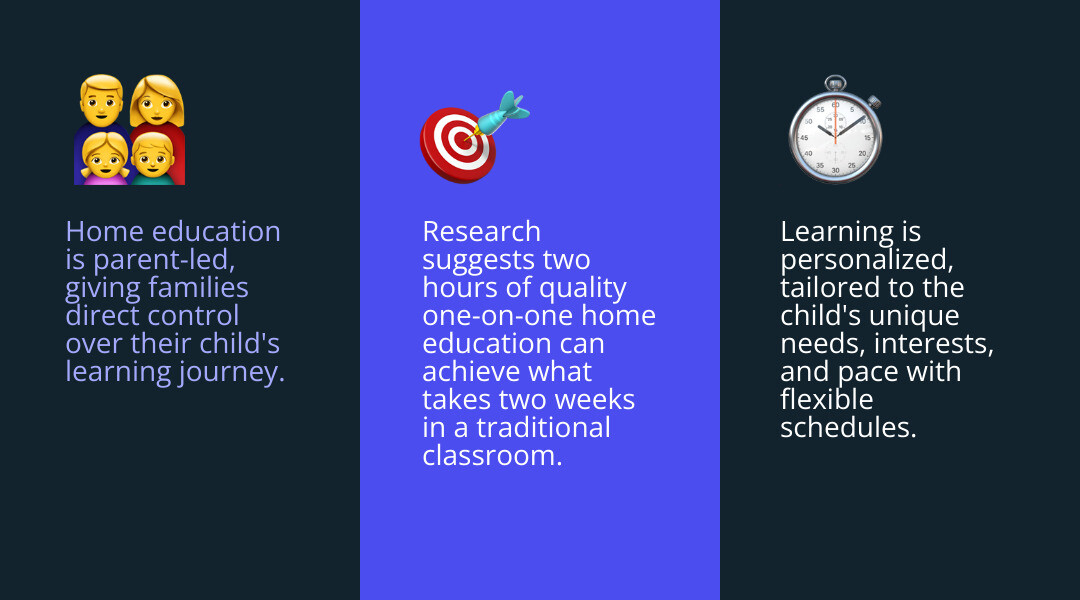
The question, what is home ed, refers to the practice of educating children at home instead of sending them to a traditional public or private school. It’s also known as homeschooling or home education. This educational choice gives parents direct control over their child’s learning journey.
Here’s a quick look at what home education typically involves:
- Parent-led instruction: Parents or guardians are the primary educators.
- Flexible learning environment: Education happens at home or in other chosen locations.
- Personalized curriculum: Learning is custom to the child’s needs, interests, and learning style.
- Individualized pace: Children can progress at their own speed.
- Alternative to traditional schooling: It offers a different path from standard classroom settings.
Home education has seen significant growth recently. Many families are choosing this path to provide a more customized and supportive learning experience for their children.
As Peter Panopoulos, founder of A Traveling Teacher, I’ve spent years immersed in education. My experience teaching in Massachusetts and my global travels have deepened my understanding of what is home ed and how personalized learning truly transforms students. This guide will explore the ins and outs of home education, helping you decide if it’s the right path for your family.
What is Home Ed? Understanding the Basics
At its heart, what is home ed is about parents taking the reins of their child’s education. Instead of sending our children to a traditional school, we get to create a learning environment that’s perfectly custom-fit for their unique needs, interests, and pace. This approach offers incredible flexibility in scheduling and curriculum design, truly putting your child at the very center of their learning journey.
One of the most significant differences from traditional schooling is the personalized, one-on-one instruction. Imagine a classroom where a teacher might be juggling 20 or 30 students. In home education, we can provide direct, focused attention that truly makes a difference. In fact, research from New Zealand even suggests that just two hours of quality one-on-one time in home education can achieve what might take two weeks in a conventional classroom! This amazing efficiency means that learning can be deeply effective and often takes less time each day than a traditional school schedule.
The modern home education movement really started to grow in the 1970s and 1980s. Visionaries like John Holt championed the idea that children are naturally curious learners and that the home is the most supportive place for learning, regardless of how good the local schools might be. Holt believed that home education shouldn’t try to be “school at home,” but rather foster a child’s natural curiosity and encourage them to learn on their own terms. This philosophy highlights a key distinction: home education is a fundamentally different and often more organic approach to learning.
A brief history of the modern homeschool movement
Why Are More Massachusetts Families Choosing to Homeschool?
The reasons why families choose home education are as wonderfully diverse as the families themselves. Here in Massachusetts, we’ve certainly seen a growing number of parents opting for this path. According to the National Home Education Research Institute (NHERI), about 3.1 million students across the United States were homeschooled during the 2021-2022 school year. This growth has been steady, with a noticeable increase since the pandemic.
So, what are some of the common motivations we hear from Massachusetts families? Many parents express concerns about traditional school fit, perhaps feeling dissatisfied with the environment, academic quality, or even worries about bullying. They often seek a safer, more supportive space for their child to learn and grow. Another big reason is the ability to customize learning for each child. Every child truly learns differently, and home education allows us to craft a curriculum that directly addresses a child’s learning style, celebrates their strengths, and gently supports any areas where they might need a little extra help. This level of customization simply isn’t possible in a one-size-fits-all classroom setting.
For children with special needs (SEND), home education can provide the individualized attention and custom strategies they need to truly thrive, free from the distractions or limitations of a larger classroom. Families also choose home education to create a safe, supportive environment that can shield children from negative peer pressure, violence, or psychological stress often present in school settings. This fosters a more secure space for both emotional and academic development.
And let’s talk about academic outcomes: research consistently shows that homeschooled children often perform exceptionally well. NHERI data indicates that homeschoolers typically score significantly higher on standardized academic achievement tests compared to traditionally schooled children. This academic advantage is often attributed to the benefits of one-on-one instruction and a custom learning pace. Finally, some families choose home education for lifestyle and philosophical reasons, aligning learning with their values, beliefs, or to accommodate unique family circumstances like extensive travel or pursuing specific talents in arts or sports.
One of the most frequent questions we encounter is about socialization. There’s a common misconception that homeschooled children are isolated or lack social skills. However, research largely debunks this “socialization myth.” Studies suggest that homeschooled children often have better social skills, higher self-esteem, and form deeper friendships. They tend to interact comfortably with a wider age range of people and are actively involved in various community activities outside the home, such as co-ops, sports leagues, and volunteer work.
Research on socialization and homeschoolers
How Does Home Ed Affect Student Well-Being?
Beyond academics, home education can profoundly impact a child’s overall well-being. We often see a noticeable reduction in stress and anxiety. The pressures of traditional school environments, including standardized testing, social hierarchies, and rigid schedules, can contribute to stress in children. Home education offers a calmer, more controlled environment where learning can happen without these external pressures.
There’s also a greater focus on mental health. With a flexible schedule and individualized attention, we can truly prioritize a child’s mental and emotional health. If a child is having a difficult day, we have the freedom to adjust the learning plan, offer breaks, or simply provide the emotional support they need, rather than forcing them through a rigid curriculum. This flexibility helps build confidence. When learning is custom to a child’s strengths and progresses at their own comfortable pace, they experience more success and less frustration. This builds a strong sense of accomplishment and self-efficacy, which are crucial for confidence. Our approach at A Traveling Teacher is centered on fostering this confidence through personalized support.
And finally, home education often leads to stronger family relationships. Spending more quality time together and collaborating on learning activities can truly strengthen family bonds. Parents become more intimately involved in their child’s intellectual and personal development, fostering a deeper understanding and connection that lasts a lifetime.
How to Start Homeschooling in Massachusetts
Making the decision to home educate is just the first step. The next is understanding the practicalities, especially the legal requirements. The good news is that homeschooling is legal in all 50 states in the U.S., including Massachusetts. However, the specific requirements vary significantly from state to state.

In Massachusetts, parents have the right to educate their children at home, but there are clear guidelines we need to follow. The primary requirement is to submit a notice of intent to your local school committee. This is typically an annual notification that lets your district know you plan to homeschool your child.
The school committee then reviews your proposed education plan to ensure it meets the state’s requirement for a “suitable” education. While following the exact public school curriculum isn’t mandatory, the education you provide must be equivalent to what’s offered in public schools in terms of subjects covered and time spent learning.
Local school committees in Massachusetts have the authority to approve or disapprove home education plans. They may request information about your curriculum, hours of instruction, and how you’ll assess your child’s progress. It’s important to be prepared with a thoughtful and comprehensive plan. While they can make informal inquiries about your child’s education, they generally cannot enter your home for monitoring purposes without reasonable grounds.
The process might feel overwhelming at first, but thousands of Massachusetts families successfully steer these requirements every year. You’re not alone in this journey.
Massachusetts law about home schooling
Creating Your Massachusetts Homeschool Education Plan
Developing your home education plan is where your creativity and your child’s unique needs truly come into play. In Massachusetts, your plan should generally cover core subjects similar to those taught in public schools. This includes reading, writing, mathematics, science, history, and the arts.
However, the beauty of home education is that how you teach these subjects, and the specific materials you use, are entirely up to you. You can choose from a vast array of curricula, or even design your own approach by combining different resources that work best for your child.
When creating your plan, start by setting clear learning goals. What do you want your child to achieve by the end of the year in each subject? These goals will guide your curriculum choices and help you track progress throughout the year.
Next comes choosing or designing a curriculum. This can range from all-in-one programs to using textbooks, online courses, educational apps, and real-world experiences. Many Massachusetts families find success with an eclectic approach, mixing different resources to match their child’s learning style.
Documenting progress is crucial for both legal compliance and your child’s academic journey. Keep records of attendance, completed assignments, projects, and assessments. This forms your Massachusetts homeschool portfolio, which can be useful for school committee reviews and future academic endeavors like college applications.
The goal is to provide a “suitable” education, not necessarily to replicate a traditional classroom. You can tailor your teaching methods to your child’s learning style, whether they thrive with hands-on activities, visual aids, or one-on-one discussion. This personalized approach is where home education truly shines.
More info about our tutoring subjects
Standardized Testing and Graduation in MA
For many homeschooling families in Massachusetts, questions about standardized testing and formal qualifications are important considerations. Homeschooled students in Massachusetts are not typically required to participate in the MCAS (Massachusetts Comprehensive Assessment System) tests. However, some families choose to have their children take these tests to gauge academic progress or fulfill specific requirements for certain programs.
When it comes to college preparation, homeschooled students have many options. SAT and ACT scores are often more important for college admissions than traditional transcripts. Many homeschooled students also take AP exams to demonstrate mastery in specific subjects and potentially earn college credit.
For younger students considering private school applications, tests like the ISEE, SSAT, and HSPT may be relevant. The PSAT serves as excellent practice for the SAT and can qualify students for National Merit recognition.
The key is starting test preparation early and choosing the right exams for your child’s goals. Many families find that working with an experienced tutor helps their child feel confident and well-prepared for these important milestones.
When it comes to high school graduation, home-educating parents typically create their child’s high school transcripts, documenting all courses, grades, and credits earned. A diploma is then issued by the parents. Colleges and employers recognize these parent-issued transcripts and diplomas, often evaluating homeschooled applicants based on their academic portfolio, test scores, and extracurricular activities.
Homeschooled students successfully gain admission to colleges and universities across the country, including highly selective institutions. The key is maintaining detailed records, preparing thoroughly for standardized tests, and building a well-rounded academic and extracurricular profile.
Designing Your Unique Homeschool Experience
One of the most exciting and empowering aspects of home education is the incredible freedom it gives you to craft a learning experience that truly fits your child and your family. This goes far beyond simply choosing textbooks; it’s about embracing different educational philosophies and finding what truly resonates.

There are many wonderful approaches to home education, each with its own unique flavor. Here are some popular homeschooling methods that families often explore:
- Unschooling: Imagine learning driven entirely by your child’s natural curiosity! Unschooling is a child-led approach where learning emerges organically from their interests and daily experiences, rather than following a fixed curriculum. It’s about fostering a deep love for findy.
- Charlotte Mason: This method focuses on rich, engaging materials like “living books” (narratives that bring subjects to life), short, focused lessons, nature study, and a strong emphasis on character and habit formation. It also encourages exposure to art, music, and poetry.
- Classical Education: This approach often follows a three-stage “Trivium” (Grammar, Logic, Rhetoric), building foundational knowledge, critical thinking, and persuasive communication skills. It involves studying great literature and historical periods to understand timeless ideas.
- Eclectic Homeschooling: This is probably the most common approach, and for good reason! Many families love to blend elements from various philosophies and curricula. It allows you to pick and choose what works best for your child’s learning style and your family’s values, creating a truly customized experience.
- Structured Schooling: Some families prefer a more traditional, “school-at-home” approach. They might use a comprehensive, all-in-one curriculum that mimics a classroom setting, complete with textbooks, workbooks, and tests. This can offer a familiar structure for both parents and children.
Finding a curriculum that fits your family is an exciting journey of findy. It involves researching different options, considering your child’s unique personality and learning preferences, and understanding your own teaching style. The great news is there are countless online and print resources available, from full-year programs to individual subject materials. This means you can truly customize and choose exactly what feels right for your family.
Social Opportunities for Homeschoolers in MA
One of the most frequent questions we hear about home education is, “What about socialization?” There’s a common misconception that children who learn at home are isolated or lack social skills. However, our experience and research consistently show that homeschooled children are often incredibly well-socialized! They engage in a wide array of activities that help them develop diverse and valuable social skills. The “socialization myth” often assumes that the only place to socialize is in a traditional classroom, which is simply not true.
In Massachusetts, there are abundant opportunities for children who are home educated to interact with peers and adults:
Many families join homeschool co-ops and learning groups. These are wonderful communities of homeschooling families who come together for shared classes, exciting field trips, mutual support, and fun social events. Children can take specialized classes like art, science, or debate, and participate in a variety of group activities.
Beyond these dedicated groups, homeschooled children actively participate in local life. They can easily join sports leagues, take music lessons, get involved in theater groups, or enroll in classes offered by community centers, libraries, and museums. These activities provide regular interaction with diverse groups of children and adults, fostering friendships and broadening their social circles.
Field trips and volunteer work are also fantastic ways to learn and connect. Imagine exploring local museums, historical sites, nature centers, or even local businesses. These outings offer both incredible learning experiences and natural opportunities for social interaction. Volunteering in the community also provides valuable social experiences, teaching civic responsibility and empathy.
We believe that true socialization is about developing the ability to interact effectively and comfortably with a wide range of people in different situations, not just peers of the same age. Because children who are home educated often interact with people of all ages in various settings, they tend to develop strong communication skills, confidence in adult interactions, and the flexibility to adapt to different social contexts.
Navigating Challenges and Finding Support
While home education offers truly incredible benefits, we understand that it also comes with its own unique set of challenges. It’s a significant commitment of time and energy, and parents can sometimes feel overwhelmed or experience burnout. Managing time and avoiding burnout, especially if you have multiple children or other family responsibilities, is crucial. Budgeting for home education can also be a consideration, as families often cover the cost of curriculum and resources themselves.
However, we want to reassure you that you are absolutely not alone on this journey. There are vast resources and supportive networks available to home education families in Massachusetts and beyond. Connecting with other homeschooling families, whether locally or online, can provide invaluable support, practical advice, and a wonderful sense of camaraderie.
One of the most effective ways to steer challenges and ensure academic excellence is to bring in specialized support. This is where personalized, one-to-one online tutoring for academic support can truly make a difference. At A Traveling Teacher, we offer services that can seamlessly integrate into your home education routine. Our expert teachers can:
- Supplement your curriculum in subjects where you might feel less confident.
- Provide advanced instruction in areas like upper-level math or science.
- Help your child prepare for standardized tests.
- Offer individualized attention to strengthen specific skills or address learning gaps.
- Build student confidence through caring, individualized support.
Our flexible scheduling means that this support can ease the burden on you, while ensuring your child receives the highest quality instruction custom just for them.
Conclusion: Your Homeschooling Journey Starts Here
Understanding what is home ed is truly the beginning of an exciting trip for your family. We’ve explored how home education offers a unique and powerful path, empowering Massachusetts parents like you to tailor learning precisely to your child’s needs. It’s a journey that prioritizes personalized instruction, fosters academic excellence, and deeply supports your child’s overall well-being. Best of all, it offers incredible flexibility for your family’s lifestyle and values.
This rewarding path is filled with opportunities for growth, findy, and even deeper family connections. While the idea of home education might seem big, remember this: you are absolutely not alone. There’s a vibrant community and a wealth of resources available to support you every step of the way.
At A Traveling Teacher, we are passionate about empowering homeschooling families right here in Massachusetts. Our personalized, one-to-one online tutoring services are designed to seamlessly complement your efforts, whether you need to fill a specific knowledge gap, explore a subject in greater depth, or prepare for important exams. Our expert teachers focus on building student confidence and helping your child achieve their unique academic goals, all with the flexibility that homeschooling families cherish.
Your homeschooling journey is wonderfully unique, and we are here to help make it a resounding success.